Mathematics encompasses the exploration of numbers, shapes, structures, and transformations, employing logic and abstraction to formulate theories that are vital to science, engineering, and everyday life. The primary branches consist of arithmetic, algebra, geometry, calculus, and statistics. This discipline entails the demonstration of theorems and the resolution of problems through practice and deductive reasoning.
Nurturing a love for mathematics in children necessitates linking it to real-life situations, making it interactive, and alleviating pressure to prevent anxiety. Children frequently enjoy math when it resembles a puzzle or a game instead of a tedious task. Establishing a positive and playful attitude towards math from an early age transforms it into a fulfilling skill that enhances confidence.
Understanding why some kids fear of math? is crucial for developing effective teaching strategies. To address this fear, it’s important to identify the root causes and provide supportive learning environments.
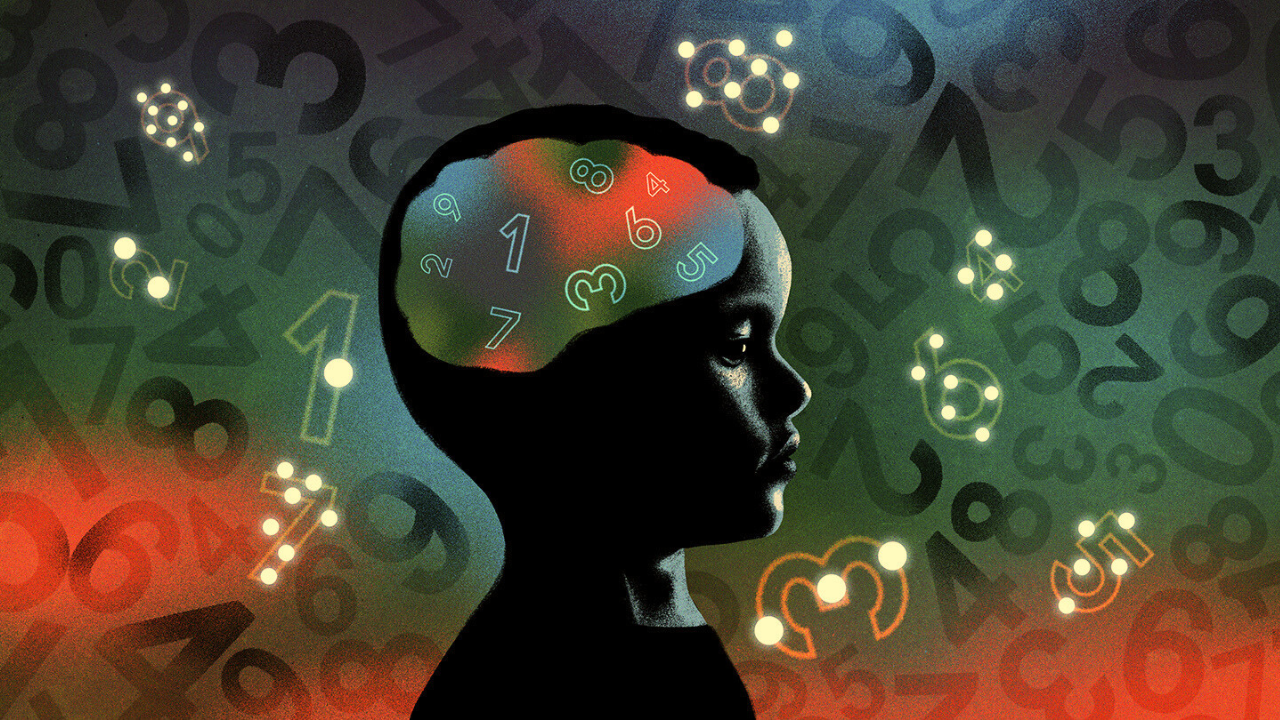
Some children face challenges with mathematics. Recently, researchers have identified certain cognitive processes and brain areas that may clarify why mathematics is somewhat more difficult for some individuals than for others. When presented with straightforward math problems, children with learning disabilities in mathematics, according to a recent study, exhibited less caution in providing their answers and did not exhibit a slowdown after making mistakes, in contrast to their peers with typical mathematical abilities. However, these discrepancies vanished when the same children were presented with problems using dots to symbolize numbers instead of Arabic numeral symbols, as reported by researchers on February 9 in the Journal of Neuroscience.
A recent study from Stanford indicates that difficulties in mathematics may involve more than just numerical concepts. Children who struggled with math were less inclined to modify their thought processes after making errors during tasks involving number comparisons. Neuroimaging revealed diminished activity in areas of the brain responsible for error monitoring and guiding behavioral adjustments. These neural patterns could serve as indicators of which children are more likely to experience difficulties. Hyesang Chang and his team at Stanford University investigated the reasons why certain children find it challenging to learn mathematics compared to their peers in a recent paper published in JNeurosci.
In their study, children were tasked with identifying which numbers were larger than others across various trials, with the quantities represented either as numerical symbols or as clusters of dots. The researchers developed a model that analyzed the extent of performance variability over time. This model indicated that children who faced difficulties in learning math had trouble adjusting their cognitive strategies when they repeatedly encountered different types of trials incorrectly. Brain imaging studies provided insights into this phenomenon, revealing diminished activity in regions associated with monitoring and modifying behavior. Furthermore, the researchers found that reduced activity in these brain regions could serve as a predictor of whether a child exhibited typical or atypical mathematical abilities.
This research implies that children who struggle with math may not only have issues with number processing but also with the ability to update their cognitive approaches while engaging with numerical information. Regarding the implications of this study, Chang stated, “These impairments may not necessarily be confined to numerical skills, but could extend to broader cognitive functions that involve monitoring task performance and adapting behavior as children learn.” The researchers aspire to apply the model they have created to larger cohorts of children with various learning disabilities.
In the recent study, researchers evaluated second- and third-grade children, both with and without math learning disabilities, by presenting them with two numbers ranging from 1 to 9 and allowing them a few seconds to determine which number they believed was larger. The researchers measured the time taken by the children to respond to the questions and monitored their brain activities using an MRI scanner. The team conducted a thorough analysis of the data concerning the children’s performance and behavior during the test, employing a sophisticated mathematical analysis aimed at uncovering subtle behavioral patterns, such as the level of care with which the children responded throughout the experiment and how their behavior shifted following mistakes. Subsequently, they compared these behavioral patterns with the recorded brain activity.
When the children were presented with similar tasks involving dots instead of numbers, the observed differences disappeared. Children with math learning disabilities exhibited the same level of activity in the two identified brain regions as their peers without such disabilities. However, Chang emphasizes that the analysis is exploratory in nature and does not establish a cause-and-effect relationship between brain activity in these areas and the mathematical abilities of these children.
Identifying these brain regions indicates that elucidating the variations in mathematical abilities is more intricate than merely pinpointing a specific area of the brain responsible for mathematics and numerical processing. Rather, the research implies that regions of the brain that are involved in information processing and error detection appear to be crucial, according to Marie Arsalidou, a developmental cognitive neuroscientist at York University in Toronto, who did not participate in the study. “We are discovering that numerous regions are engaged.”
One significant revelation from this new research, Chang notes, is that “there are concealed mechanisms that distinguish students who may be at risk for math learning challenges.” Future interventions, she suggests, might include instructing children on how to reflect on their problem-solving approaches and even teaching them various strategies for solving problems.
Source: sciencenews, eurekalert.org, scitechdaily.com