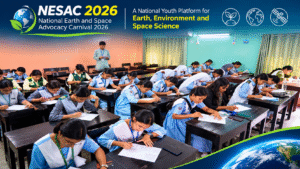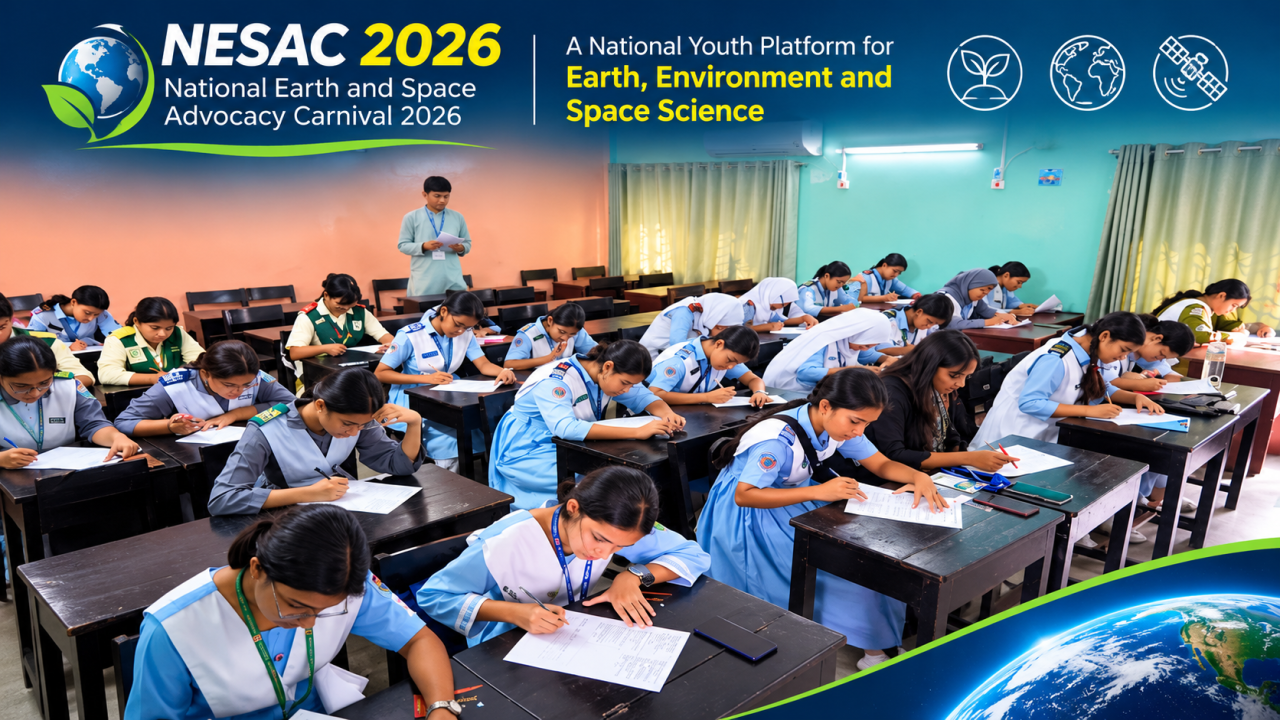
In an inspiring demonstration of youth leadership, scientific curiosity, and environmental advocacy, the National Earth and Space Advocacy Carnival (NESAC) 2026 was successfully held on October 30–31, 2026, at Bangladesh International School & College (BISC), Mohakhali, Dhaka. This event highlighted the importance of Earth Science and its relevance to our understanding of environmental issues.
Organized by the BISC Earth Club, the two-day carnival brought together nearly 1,000 participants, ranging from Class Three students to university-level learners. With students participating from Dhaka and different parts of the country, including Sylhet, Dinajpur, and Tangail, the event emerged as one of Dhaka’s largest student-focused carnivals of 2026 dedicated to environmental issues and Earth Science, particularly in the domain of space science.
The carnival represented more than an academic gathering. It provided an important platform for young people to come together around two interconnected areas of global importance: understanding and protecting our planet and exploring the mysteries and possibilities of space.
The carnival represented more than an academic gathering. It provided an important platform for young people to come together around two interconnected areas of global importance: understanding and protecting our planet through Earth Science and exploring the mysteries and possibilities of space.
Bringing young minds together from across Bangladesh
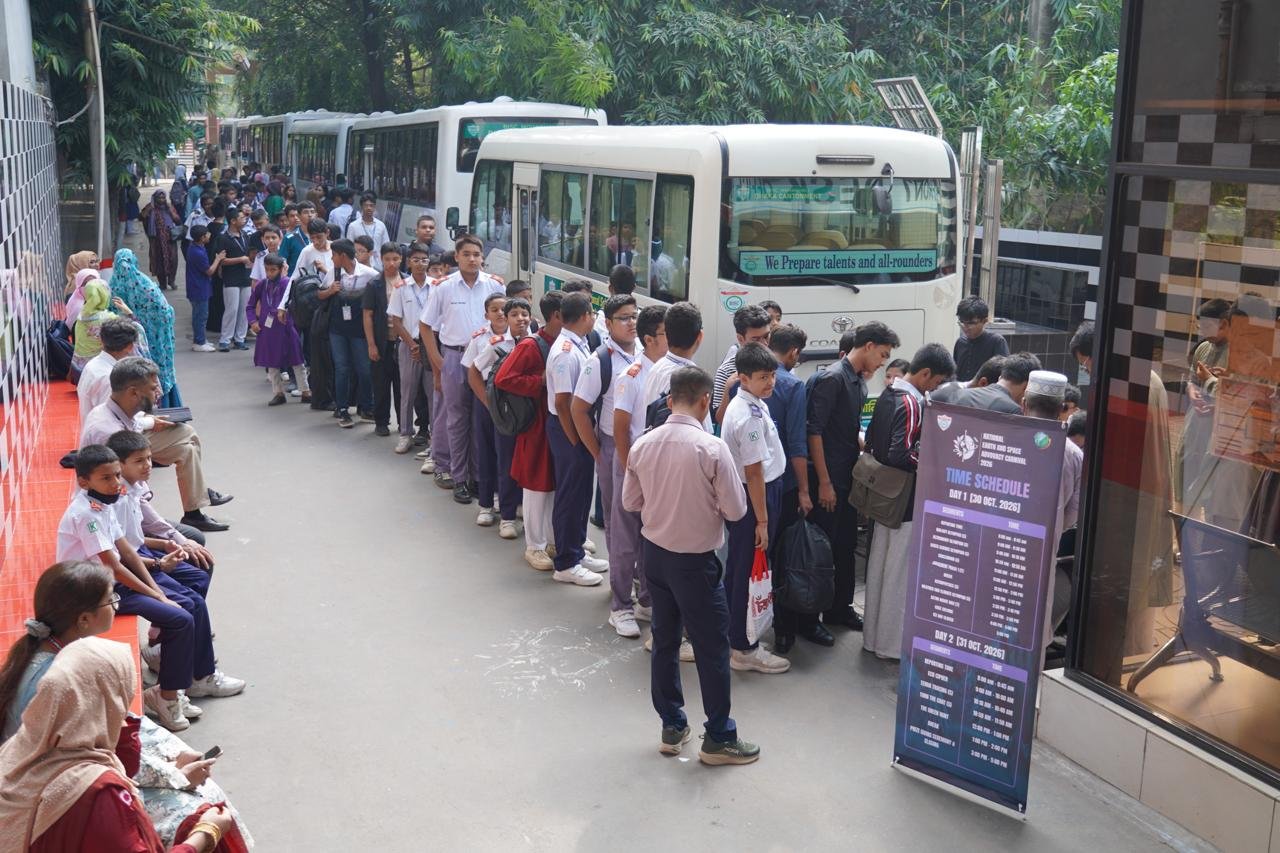
One of the most remarkable aspects of NESAC 2026 was its ability to bring together students from different educational levels and geographical backgrounds.
From primary school students to university learners, participants shared a common interest in Earth and space-related subjects. The participation of students from outside Dhaka also demonstrated the growing enthusiasm for science, environmental education, and student-led initiatives across Bangladesh.
Such national-level gatherings are particularly important in encouraging young learners to look beyond traditional classroom education. They create opportunities for students to engage with scientific ideas, exchange perspectives, develop confidence, and recognize the importance of science in addressing contemporary global challenges.
At a time when climate change, environmental degradation, biodiversity loss, and rapid technological advancement are shaping the future of humanity, introducing these issues to younger generations is increasingly important.
Earth and space science: Two interconnected frontiers
Earth science and space science may appear to be separate disciplines, but they are closely interconnected in understanding our planet and its place in the universe.
Earth science helps us understand the natural systems that sustain life, including climate, ecosystems, biodiversity, geology, and environmental processes. Space science, meanwhile, expands our understanding of the universe, planetary systems, satellites, and the technological innovations that increasingly support life on Earth.
Today, satellite technology and space-based observation play significant roles in environmental monitoring, weather forecasting, climate research, disaster management, agricultural planning, and natural resource management.
For a country like Bangladesh, which faces considerable environmental challenges, scientific literacy in these areas is especially valuable. Understanding climate systems, environmental changes, and emerging technologies can help prepare future generations to contribute to sustainable development and national resilience.
By bringing Earth and space science into a shared educational platform, NESAC 2026 highlighted the importance of developing scientific curiosity among young people and encouraging them to become informed global citizens.
Leadership and teamwork behind the successful event
The successful organization of such a large-scale student-led event required strong leadership, coordination, and teamwork.
The carnival was guided by Bangladesh International School & College Principal Brig. Gen. Md. Rafiqul Islam (retd) and BISC Earth Club Moderator Sharmin Jahan Shanti.
The conceptualization and principal execution of the event were spearheaded by Ishfar Kashem, President of the BISC Earth Club, and Zahin Abrar Rahman, Vice President.
A dedicated team of student volunteers worked tirelessly, managing different operational responsibilities throughout the preparation and implementation of the carnival. Their collective commitment and coordination played an important role in bringing the event to a successful conclusion.
The involvement of students in organizing a national-level initiative demonstrates an important educational principle: leadership, responsibility, communication, and teamwork are best developed not only through classroom instruction but also through practical experience.
The importance of student-led scientific initiatives
Student-led initiatives have enormous potential to strengthen science education and environmental awareness in Bangladesh.
Traditional education provides the foundation of scientific knowledge, but extracurricular platforms allow students to explore their interests, express ideas, and develop practical leadership skills. Events such as NESAC provide opportunities to connect scientific learning with broader societal concerns.
Young people today will inherit the responsibility of addressing some of the world’s most pressing challenges. These include climate change, biodiversity conservation, pollution, sustainable resource management, food security, and the responsible use of emerging technologies.
Encouraging students to explore these subjects at an early age can help develop a generation that is scientifically informed, environmentally responsible, and capable of contributing to evidence-based decision-making.
Furthermore, national-level student gatherings can help build connections among educational institutions and create a stronger culture of scientific collaboration.
A promising example for the future
The National Earth and Space Advocacy Carnival 2026 demonstrated what young people can achieve when they are given the opportunity, encouragement, and responsibility to lead initiatives addressing global issues.
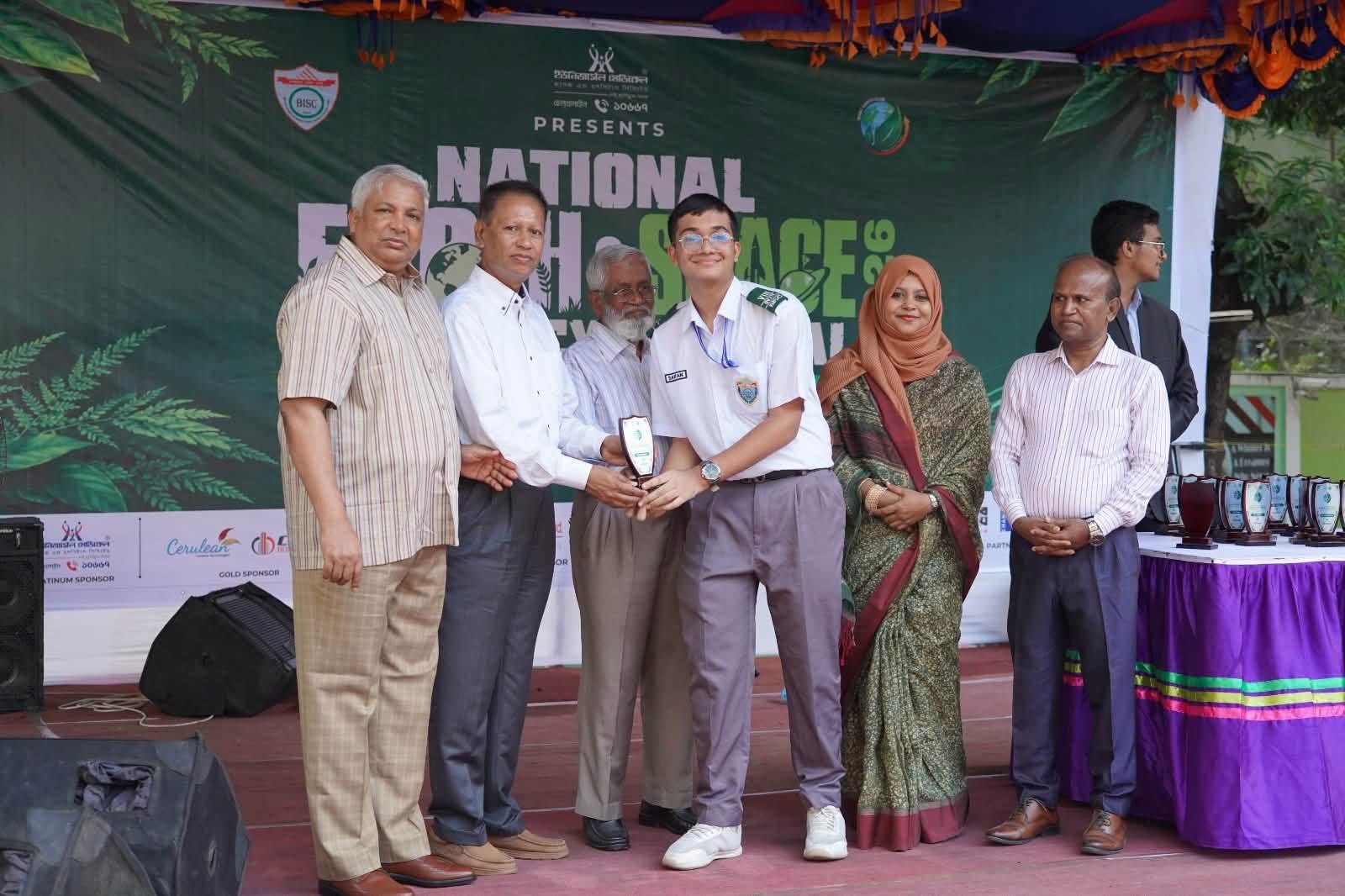
The participation of nearly 1,000 students from different educational backgrounds and regions of Bangladesh reflects the potential of youth-driven platforms to promote scientific engagement and environmental consciousness.
The achievement of the BISC Earth Club and its organizing team also provides an encouraging example for other educational institutions seeking to promote science-based extracurricular activities.
Looking ahead, initiatives of this nature can contribute to building a stronger connection between science education, environmental advocacy, and community engagement. Sustaining such platforms and encouraging wider participation from educational institutions across the country could further strengthen Bangladesh’s culture of scientific learning.
The National Earth and Space Advocacy Carnival 2026 was a remarkable example of how student leadership can bring scientific curiosity and environmental awareness into the spotlight.
By uniting nearly 1,000 participants from primary, secondary, and university-level education, the BISC Earth Club created a platform that celebrated the importance of Earth and space science while demonstrating the power of collective action.
Ultimately, protecting our planet and exploring the universe both begin with curiosity, knowledge, and a willingness to learn. The enthusiasm demonstrated by the young participants of NESAC 2026 offers an encouraging message: Bangladesh’s next generation has the potential to become an active contributor to scientific discovery, environmental stewardship, and a more sustainable future.