International agricultural trade has become a cornerstone of global food security, economic development, and rural livelihoods. Every year, billions of dollars’ worth of agricultural commodities—including fruits, vegetables, grains, seeds, timber, and ornamental plants—are traded across international borders. While this trade creates opportunities for economic growth and food availability, it also increases the risk of introducing and spreading harmful plant pests and diseases.
History has repeatedly demonstrated the devastating consequences of invasive pests. The introduction of pests such as the Mediterranean fruit fly, Fall Armyworm, Red Palm Weevil, and Asian Longhorn Beetle has caused significant economic losses, reduced agricultural productivity, and threatened biodiversity in many countries. In today’s interconnected world, preventing the movement of pests through international trade is a major challenge for governments and regulatory authorities.
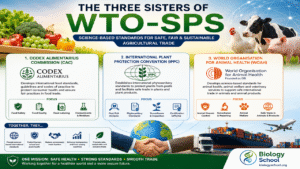
To address this challenge, countries cooperate through the International Plant Protection Convention (IPPC), an international treaty administered by the Food and Agriculture Organization (FAO) of the United Nations. One of the IPPC’s most important contributions is the development of International Standards for Phytosanitary Measures (ISPMs), which provide harmonized, science-based guidelines for protecting plant resources while facilitating safe trade and ensuring compliance with ISPMs.
ISPMs have become the foundation of modern phytosanitary systems and play a crucial role in ensuring that international agricultural trade remains safe, transparent, and sustainable.
By following ISPMs, countries can work together to mitigate the risks associated with pest introduction and promote healthy agricultural practices across borders.
Understanding ISPMs
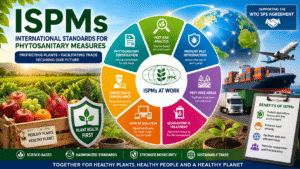
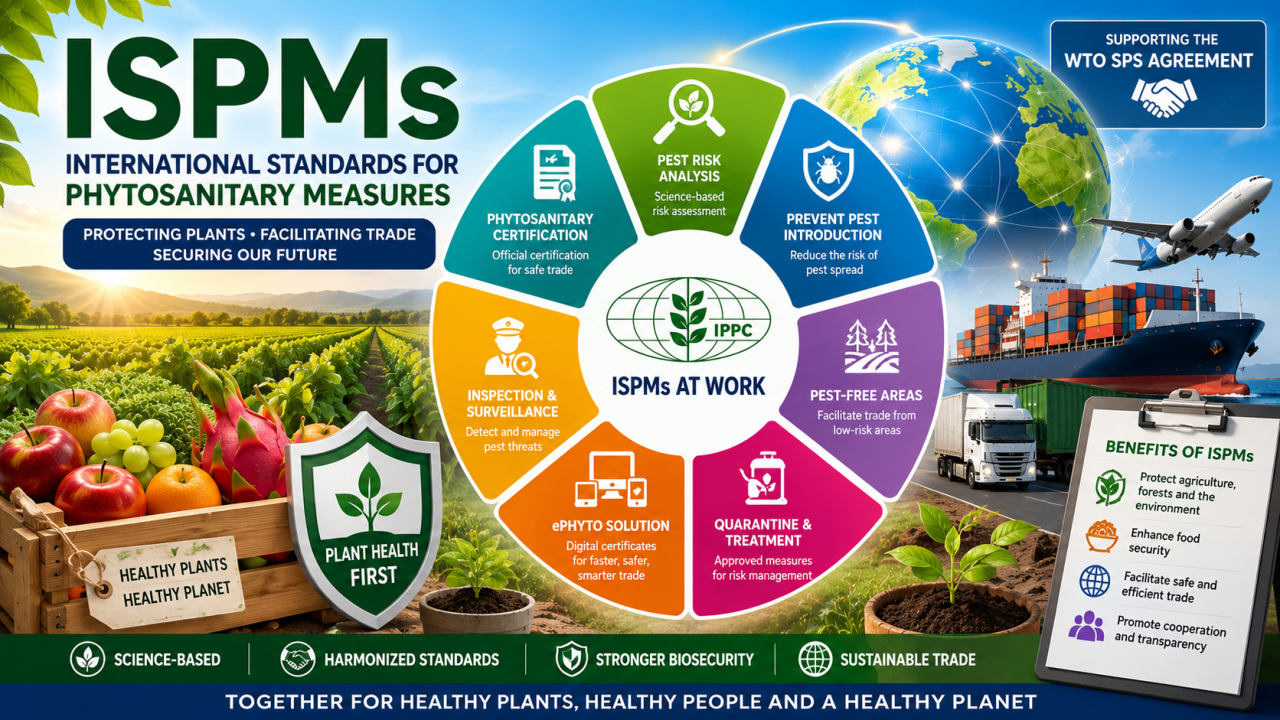
International Standards for Phytosanitary Measures (ISPMs) are internationally agreed standards adopted under the framework of the IPPC. These standards provide guidance to National Plant Protection Organizations (NPPOs) on preventing the introduction and spread of plant pests while minimizing unnecessary restrictions on trade.
ISPMs establish internationally recognized procedures for:
- Pest risk analysis
- Import and export regulations
- Inspection and surveillance
- Pest-free areas
- Phytosanitary certification
- Quarantine treatments
- Pest eradication programs
- Diagnostic procedures
- Electronic phytosanitary certification (ePhyto)
The standards are developed through a rigorous scientific process involving experts from contracting parties around the world and are formally adopted by the IPPC Commission on Phytosanitary Measures (CPM).
Relationship Between ISPMs and the WTO SPS Agreement
The relationship between the International Standards for Phytosanitary Measures (ISPMs) and the WTO Sanitary and Phytosanitary (SPS) Agreement is a structured scientific–legal linkage where ISPMs provide the technical foundation and the SPS Agreement provides the legal framework for their application in international trade.
ISPMs, developed under the International Plant Protection Convention, serve as the international reference standards for plant health measures. The WTO SPS Agreement recognizes these standards as the primary basis for harmonizing phytosanitary regulations among member countries.
Under this relationship:
- ISPMs define the scientific methods and technical guidelines for managing plant pests and ensuring safe trade.
- The SPS Agreement requires WTO members to base their plant health measures on international standards where they exist, which explicitly includes ISPMs.
- When a country’s phytosanitary measures conform to ISPMs, they are generally presumed to be SPS-compliant and scientifically justified.
- If a country applies stricter measures than those outlined in ISPMs, it must provide scientific justification through risk assessment, typically consistent with ISPM-based pest risk analysis principles.
Thus, ISPMs function as the global benchmark for phytosanitary science, while the SPS Agreement functions as the binding trade law that promotes their use and enforces consistency in international plant health regulations.
How ISPMs Facilitate Safe Agricultural Trade
Harmonization of Phytosanitary Measures
One of the greatest contributions of ISPMs is the harmonization of phytosanitary measures among countries.
Without harmonized standards, every country could establish different import requirements, creating confusion and increasing compliance costs for exporters.
ISPMs provide a common framework that allows countries to apply consistent phytosanitary measures based on internationally accepted principles. This harmonization promotes predictability and fairness in trade.
For example, a phytosanitary certificate issued according to IPPC standards is widely recognized by trading partners, reducing the likelihood of disputes and shipment delays.
Prevention of Pest Introduction and Spread
The primary purpose of ISPMs is to prevent the introduction and spread of harmful plant pests.
Global trade is one of the main pathways through which invasive pests move from one region to another. Imported plants, fruits, vegetables, wood packaging materials, and seeds can all carry pests capable of establishing in new environments.
ISPMs provide guidance on:
- Pest surveillance
- Inspection procedures
- Quarantine measures
- Treatment requirements
- Risk management strategies
These measures significantly reduce the likelihood of pest introductions and help protect agriculture, forestry, and natural ecosystems.
Supporting Science-Based Risk Management
ISPMs emphasize science-based decision making and risk assessment.
Rather than imposing arbitrary restrictions, countries are encouraged to evaluate the actual risks associated with specific pests and commodities.
This approach is particularly evident in ISPM 2 (Framework for Pest Risk Analysis) and ISPM 11 (Pest Risk Analysis for Quarantine Pests).
Pest Risk Analysis (PRA) allows authorities to:
- Identify potential pest threats.
- Assess the likelihood of establishment and spread.
- Estimate economic and environmental impacts.
- Determine appropriate risk management measures.
By using scientific evidence, countries can balance plant health protection with trade facilitation.
Key ISPMs Supporting Agricultural Trade
ISPM 2: Framework for Pest Risk Analysis
ISPM 2 provides the conceptual framework for conducting pest risk analysis.
It helps NPPOs evaluate pest risks and develop scientifically justified phytosanitary measures.
ISPM 11: Pest Risk Analysis for Quarantine Pests
This standard provides detailed procedures for assessing quarantine pest risks and selecting appropriate management options.
It is one of the most widely used ISPMs in international trade decision-making.
ISPM 12: Phytosanitary Certificates
ISPM 12 establishes the international format and requirements for phytosanitary certificates.
The standard ensures that certificates contain accurate and consistent information recognized worldwide.
ISPM 15: Regulation of Wood Packaging Material
ISPM 15 is among the most successful phytosanitary standards globally.
It requires wood packaging materials such as pallets and crates to undergo approved treatments and bear internationally recognized markings.
The standard has significantly reduced the spread of wood-boring pests through international trade.
ISPM 26: Establishment of Pest Free Areas
ISPM 26 provides guidance for establishing pest-free areas that facilitate trade from regions free of specific pests.
Many countries use pest-free area recognition to export agricultural products while maintaining high levels of biosecurity.
ISPM 38: International Movement of Seeds
This standard addresses phytosanitary risks associated with seed trade and provides guidance on managing seed-borne pests.
ISPM 45: Requirements for NPPOs for the Use of Electronic Certification Systems
ISPM 45 supports the implementation of electronic certification systems, including the IPPC ePhyto Solution.
This standard contributes to faster, safer, and more efficient trade documentation.
Benefits of ISPMs for exporting and importing Countries
International Standards for Phytosanitary Measures (ISPMs), developed under the framework of the International Plant Protection Convention, provide a globally harmonized system for managing plant health risks in international trade. These standards deliver significant benefits to both exporting and importing countries by improving safety, efficiency, and trust in agricultural trade.
For exporting countries, ISPMs create clearer and more predictable market access conditions. When exporters follow internationally recognized standards, such as pest risk analysis, phytosanitary certification, and treatment protocols, their products are less likely to be rejected at foreign borders. This reduces shipment delays, financial losses, and reputational risks. ISPMs also help exporters meet multiple countries’ requirements more efficiently, as harmonized standards reduce the need to adapt to different regulations for each trading partner. Additionally, compliance with ISPMs enhances the credibility of national plant protection systems, improving access to high-value international markets.
For importing countries, ISPMs provide a strong scientific basis for protecting agriculture, ecosystems, and biodiversity from invasive pests. By applying standardized pest risk analysis and inspection procedures, importing countries can make informed decisions about the level of phytosanitary protection required. ISPMs also reduce the risk of introducing harmful pests through traded commodities, wood packaging materials, or other pathways. This helps safeguard food security and reduces long-term economic losses associated with pest outbreaks and control measures.
Both exporting and importing countries benefit from greater transparency and trust in trade relationships. ISPMs ensure that phytosanitary measures are science-based, consistent, and internationally recognized, reducing disputes and unnecessary trade barriers. They also support capacity building in developing countries by providing technical guidelines for inspection systems, quarantine procedures, and surveillance programs.
In summary, ISPMs create a balanced system where exporting countries gain improved market access and reduced trade disruptions, while importing countries achieve stronger biosecurity protection. This mutual benefit strengthens global agricultural trade and promotes sustainable plant health management worldwide.
Conclusion
International Standards for Phytosanitary Measures (ISPMs) are among the most important tools for protecting global plant resources while facilitating international agricultural trade. By providing harmonized, science-based guidance for pest risk analysis, surveillance, certification, quarantine, and trade facilitation, ISPMs help countries balance plant health protection with economic development.
Their contribution extends beyond trade facilitation to include food security, biodiversity conservation, environmental protection, and sustainable agriculture. As globalization continues to increase the movement of agricultural commodities, the importance of ISPMs in safeguarding agriculture and ensuring safe trade will continue to grow.
Through international cooperation, scientific innovation, and effective implementation, ISPMs will remain a cornerstone of global agricultural biosecurity and sustainable agricultural trade in the twenty-first century.